
.svg)
Read
5 min
Date
August 13, 2024


5 min
August 13, 2024
Knees, just like hips, are the joints most at risk of arthrosis, a degenerative disease of the bone, caused by the progressive wear of cartilage protecting the ends of bones in a joint. Osteoarthrosis (not to be confused with osteoarthritis!) is the most common joint disorder in the past 50 years, above all among women, and to date there is still unfortunately no definitive cure, with the exception of a prosthetic replacement in a number of cases.
Gonarthrosis, commonly referred to as osteoarthritis of the knee, is a degenerative joint disease characterized by the breakdown of cartilage in the knee joint. This condition leads to pain, stiffness, swelling, and reduced mobility.

Risk factors for gonarthrosis include age, obesity, joint injuries, and genetics. As the cartilage wears away, the bones may begin to rub against each other, causing pain and inflammation.
Main causes of gonarthrosis:
Regardless of the specific cause of osteoarthritis, the main problem is an imbalance between the processes of destruction and regeneration in the joint tissues . At the cellular level, this means that in the joint:
In clinical terms, we can describe as “pre-arthrosis stage” the phase of early onset, including muscular hypotonia, ligament laxity, tendon alterations, and intermittent knee pain. This condition usually progresses to become fully developed arthrosis in 10 – 15 years.

In the phase of advanced gonarthrosis, the patient will complain of pain at rest, which increases when under load, going downstairs, and walking on uneven surfaces. The joint pain, often also overnight, is often located below the patella, on the inside of the knee, in the popliteal fossa (knee pit), then spreading to the entire joint.
Patients find it difficult to walk after sitting for long periods, and the joint is often stiff and swollen.
Arthrosis is generally classified into 5 different degrees of severity according to the Kellgren-Lawrence score (Lützner et al. 2006):
Gonarthrosis is diagnosed by the doctor based on the patient’s clinical history, a physical examination and by x-rays. The images highlight the narrowing of the joint line, erosion of the radiographic contours and other typical symptoms, such as osteophytes (small bone spurs that form on the joint, typical of degenerative phenomena like arthrosis), osteosclerosis (i.e. thickening of the bone, which becomes harder and more compact, losing elasticity) and the presence of subchondral geodes (bone cysts).
Magnetic resonance imaging (MRI) is usually not necessary. However, an MRI can be helpful in distinguishing isolated cartilage damage from incipient osteoarthritis.
While there is no specific laboratory test for gonarthrosis, blood tests may be conducted to rule out other forms of arthritis, such as rheumatoid arthritis or gout. These tests can include markers like rheumatoid factor or uric acid levels.
Treatment options often include:

Nonsteroidal anti-inflammatory drugs (NSAIDs) . The main mechanism of action of these drugs is the inhibition of the inflammatory process and the elimination of pain. There is no cleansing of tissues from dead cells. They improve the patient's condition, but do not slow down the progression of the disease. These drugs are taken almost throughout life. At the same time, side effects often appear: they negatively affect the condition of the gastric and intestinal mucosa, and their prolonged use is fraught with the development of gastritis, ulcers and ulcerative bleeding. Some NSAIDs (ibuprofen, etc.) negatively affect cartilage, further provoking the development of osteoarthritis.
Dietary supplements (collagen, hyaluronic acid in tablet form, glucosamine) . They are used to restore joint cartilage. However, numerous studies (including one published in the British Medical Journal in July 2010) have not shown any effect even compared to placebo.
Hormonal drugs , which are usually injected directly into the joint. Used only on strict medical advice and in extreme cases, with severe pain that cannot be eliminated by NSAIDs. Hormonal drugs suppress the immune system, and the process of removing dead cells from the joints is reduced accordingly. As a result of treatment, the intensity of inflammation decreases, the person feels relief. There are side effects: the production of one's own hormones is limited, metabolic processes may be disrupted, etc. The cause of the disease is not eliminated.
Hyaluronic acid – an important component of cartilage tissue. It can be injected into the joint only after the inflammatory process has been eliminated. In Germany, hyaluronic acid injections for knee pain typically range from €120 to €400 per injection, with some clinics charging upwards of €370 per milliliter. The total cost can vary depending on the number of injections needed (usually 2-5), the specific product used, and the clinic's pricing structure. The price for the treatment could thus be between €400 and €2000.
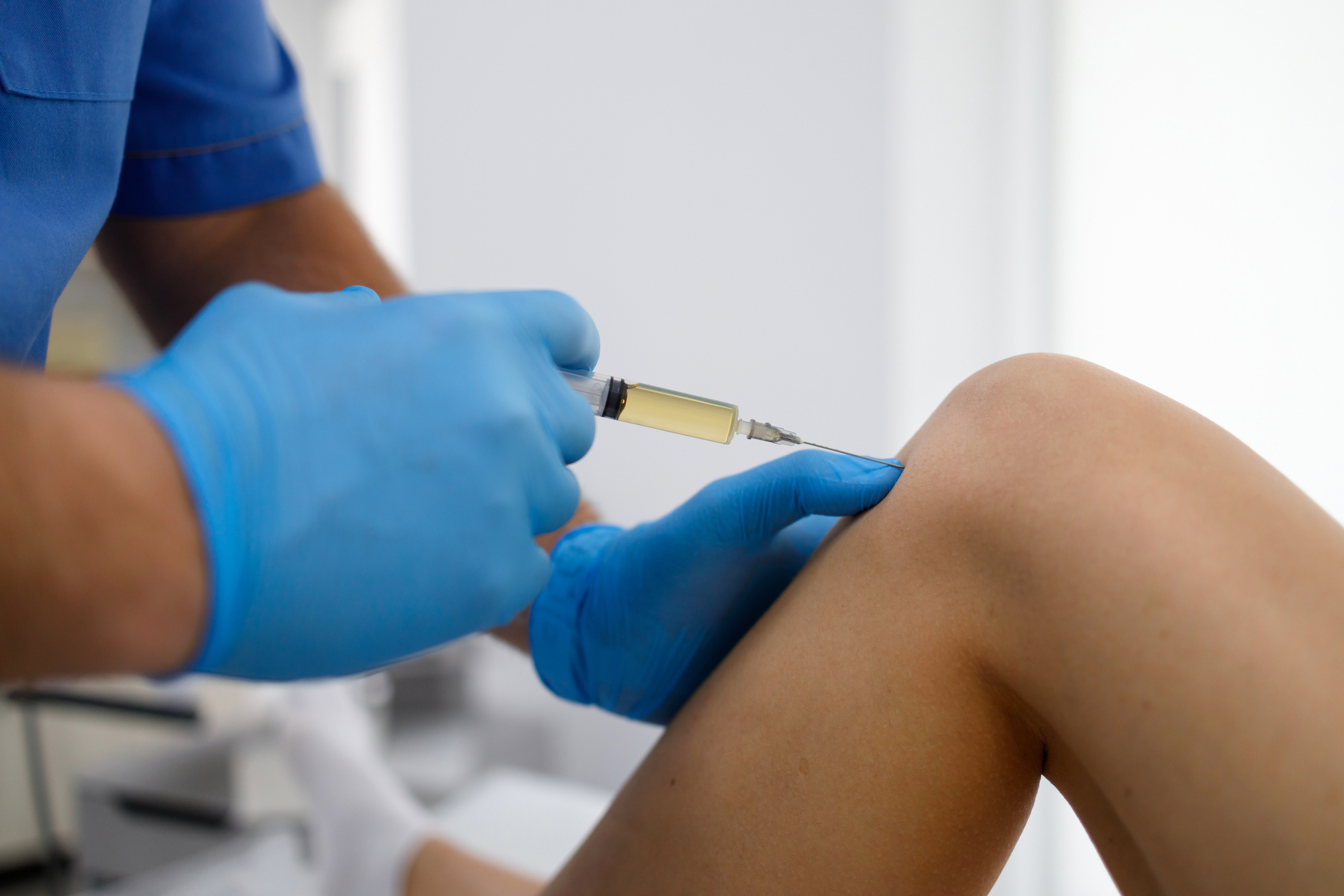
So, drug therapy is only aimed at alleviating the symptoms of the disease, but is not aimed at cleansing or nourishing the joint tissues. Drugs slow down, "freeze" the protective inflammatory process launched by the body.
Temporary elimination of pain is also dangerous due to the fact that the patient stops "sparing" the sore joint . This aggravates damage to the cartilage and bones. Therefore, the disease inevitably returns, and the pain only intensifies due to the occurrence of additional damage during the period of imaginary "calm". And soon the only option is to replace the joint.
3. Surgery
Joint endoprosthesis – a complicated, expensive operation, in which serious postoperative complications are possible (associated infections, deep vein thrombosis, nerve inflammation, etc.). In case of infections, osteomyelitis may develop, which requires removal of the prosthesis and bone areas. The functionality of the prosthesis is lower than in a real joint. With a fall and careless movements, displacement, rupture of fragments of the artificial joint are possible, which requires reoperation. In such cases, there is a high risk of becoming a wheelchair user.
In addition to drug treatment and surgery, there are additional methods:
However, the effectiveness of these methods in treating osteoarthritis is questionable because they do not eliminate the main cause of the disease – the imbalance between the destruction and reconstruction of joint tissues.
However, there is a solution! The energy of biological microvibrations can be delivered from the outside using vibroacoustic therapy, known as phonation .
Phonation is the transmission of sound microvibrations (in the frequency range of 30-20,000 Hz) to the body of a person or animal using a special compact medical device. Such sound microvibrations are natural for the body, their physical properties resemble biological microvibrations that appear in muscle tissue during maximum static load.
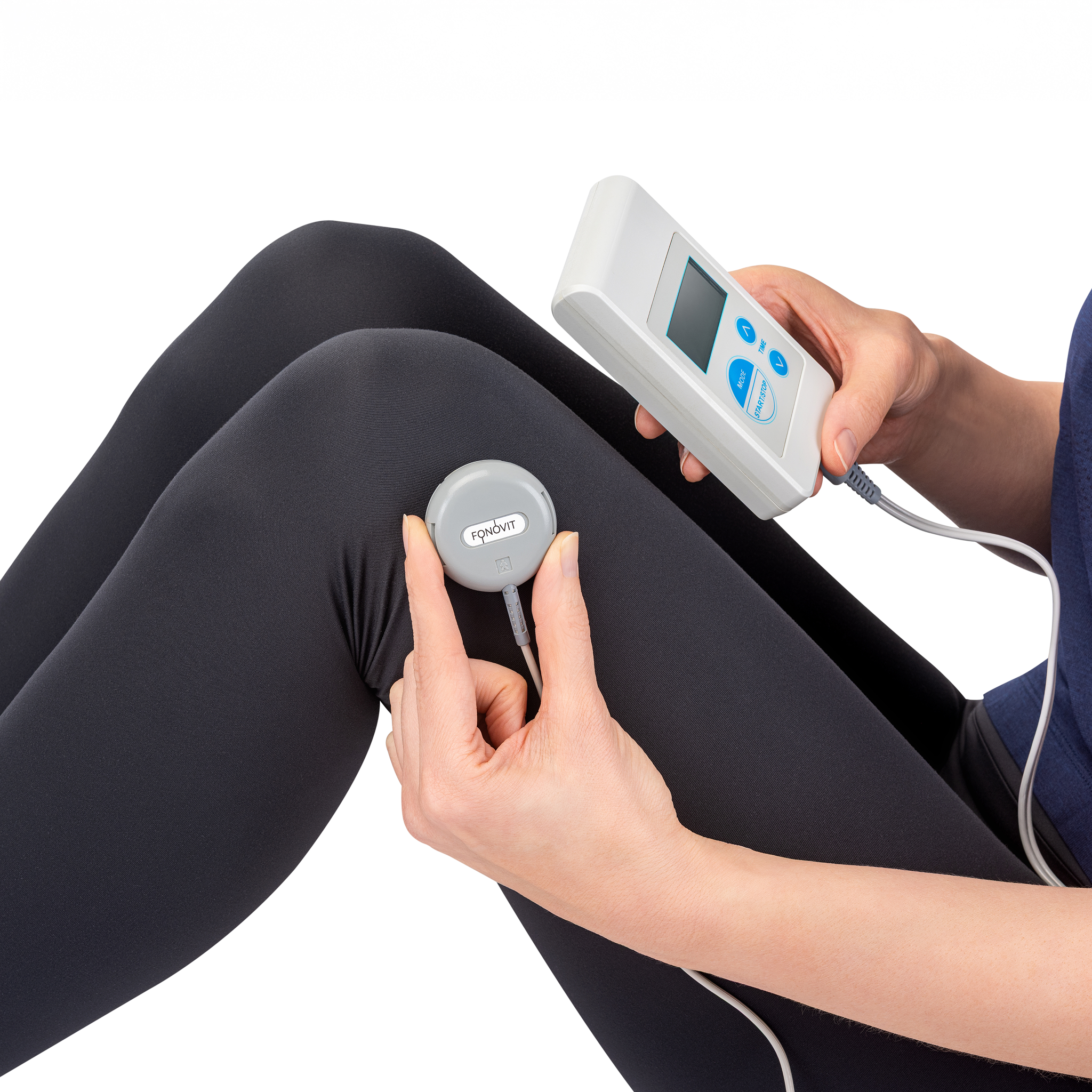
In this way, phonation, used at home, is an alternative to physical exercises in the treatment of degeneration (arthrosis) and arthritis. Its effectiveness is even greater because it is an external and "clean" source of energy compared to muscle work. Microvibrations are directed directly to the affected joint (up to 10 cm deep). Thanks to the external source, muscle tissues that have lost activity during periods of physical inactivity, overload, stress or hypothermia, regain their contractile activity and the necessary level of microvibrations . Despite its simplicity, phonation has many beneficial health effects:
Importantly, phonation does not cause any side effects and its beneficial effects last for a long time.
The effectiveness of vibroacoustic therapy, i.e. phonation using the Fonovit medical device in treating degenerative joint disease, has been confirmed by many scientific studies. According to scientific findings, this therapy has an effectiveness of up to 90% in treating degenerative joint disease.
In particular, a study conducted at the Nicolaus Copernicus University Medical College focusing on vibroacoustic therapy in the treatment of knee osteoarthritis in patients over 44 years of age, half of whom were overweight, showed the following benefits:
Benefits of phonation (vibroacoustic therapy) using the Fonovit medical device:
NOTE
Before beginning any treatment, please consult with your doctor or physiotherapist to discuss your symptoms and receive a clear diagnosis.


Fonovit Schallwellengeräte können lediglich Symptome lindern, niemals aber die Grunderkrankung heilen und auch nicht den Arztbesuch ersetzen. Wir empfehlen Ihnen, die Behandlung idealerweise mit Ihrem behandelnden Arzt oder Therapeuten abzusprechen. Brechen Sie die Behandlung unverzüglich ab, sollten sich Unwohlsein, Schwindel, verstärkte Schmerzen oder Hautirritationen einstellen. Bitte beachten Sie stets die aufgelisteten Gegenanzeigen.